
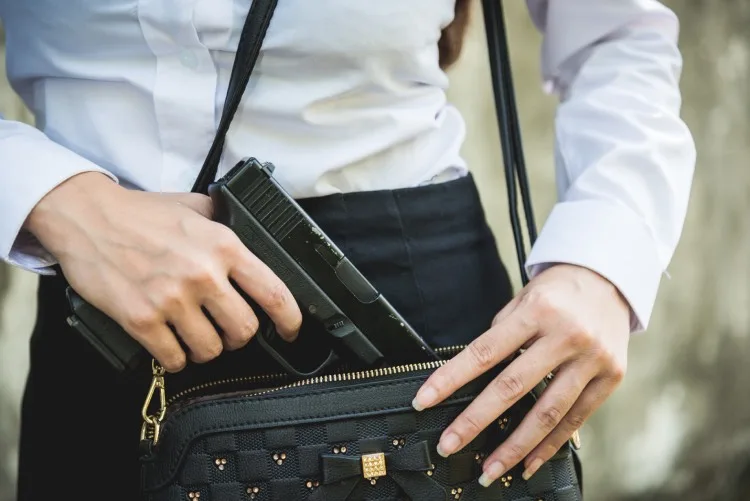
Georgia's Shift to Permitless Carry
In 2022, Georgia lawmakers passed a permitless carry law that removed the requirement for most adults to obtain a weapons carry license before carrying a handgun, openly or concealed. This change surprised many longtime Savannah residents who grew up under the older licensing system, and it continues to create confusion about what is and is not legal today.
The reality is more nuanced than most people realize. Permitless carry only applies to individuals who are legally eligible to obtain a weapons carry license in the first place. Anyone who would be denied a license, whether due to a felony conviction, certain misdemeanor convictions, mental health adjudications, active protective orders, or age restrictions, is still committing a crime by carrying a concealed weapon, regardless of the 2022 law.
This distinction matters enormously in practice. Police officers in Savannah cannot tell, just by looking at a firearm, whether the person carrying it is legally eligible to do so. That determination is made after the fact, based on a criminal history check, which means the legality of the same exact conduct can turn entirely on facts about the person rather than facts about the gun itself.
Who Still Needs a License or Is Still Prohibited
Several categories of people in Chatham County are not covered by permitless carry and can face charges for concealed carry without meeting the underlying eligibility requirements.
- Individuals under 21, outside narrow military and law enforcement exceptions
- Convicted felons and certain domestic violence misdemeanants
- Individuals subject to an active temporary protective order
- Individuals previously involuntarily hospitalized for mental health treatment without later restoration of rights
- Non-residents whose home state does not have reciprocity with Georgia
- Individuals convicted of certain drug offenses within the past five years

When Concealed Carry Becomes a Misdemeanor
For someone who is otherwise eligible to carry but simply has not obtained, or cannot immediately produce, a weapons carry license in situations still requiring one, the offense is generally treated as a misdemeanor under Georgia law. This typically applies to isolated technical violations rather than cases involving prohibited possessors.
A misdemeanor concealed carry charge in Chatham County State Court can still result in fines, probation, and a permanent criminal record, even though it does not carry the severe mandatory minimums associated with felony gun offenses.
When Concealed Carry Becomes a Felony
The charge escalates dramatically when the person carrying the concealed weapon is legally prohibited from possessing a firearm at all. In these cases, prosecutors do not charge a simple carrying violation. Instead, they pursue possession of a firearm by a convicted felon under O.C.G.A. § 16-11-131, which is a felony carrying a mandatory minimum sentence.
The charge can also become a felony when the concealed weapon is connected to another offense, such as drug trafficking, robbery, or aggravated assault, triggering possession of a firearm during the commission of a felony under O.C.G.A. § 16-11-106. This statute adds a mandatory, consecutive five year sentence that a judge cannot waive or run concurrently.
Location Based Violations in Savannah
Even individuals who are fully eligible to carry a concealed weapon in Georgia can still be charged if the firearm is carried into a location where firearms are restricted by law. In Savannah, this commonly includes courthouses, jails, portions of Savannah Hardin State Farmers Market events, bars and establishments that primarily serve alcohol, and school safety zones surrounding the many schools throughout Chatham County. These location based charges are separate from possession itself and can apply even to a licensed, otherwise lawful gun owner.
How Prior Convictions Affect Concealed Carry Charges
A person’s criminal history plays an outsized role in how a concealed weapon case is charged and resolved in Chatham County. First time offenders without disqualifying convictions are far more likely to see a case resolved through pretrial diversion, reduced charges, or favorable plea negotiations. Anyone with a prior felony, a domestic violence conviction, or an existing gun related offense should expect prosecutors to pursue the case far more aggressively, often seeking the maximum available penalty.
Defending Against a Concealed Carry Charge
Effective defense strategies often begin with challenging how the firearm was discovered. If police lacked a legal basis to stop, detain, or search the individual, evidence of the concealed weapon may be suppressed entirely. Other defenses focus on whether the person actually knew a license was required in that specific circumstance, whether the weapon was genuinely concealed under Georgia’s legal definition, or whether the individual was in fact eligible for permitless carry and wrongly charged.
Why the Details of the Stop Matter So Much
In concealed carry cases, the legal analysis often has little to do with the gun itself and everything to do with how officers came to find it. Georgia courts have repeatedly scrutinized whether a stop was properly extended beyond its original purpose, whether consent to search was freely given or merely implied, and whether an officer’s stated justification for a pat down search holds up under cross examination.
Body camera footage, dispatch recordings, and incident reports frequently contain inconsistencies that a defense attorney can use to challenge the state’s version of events. Because concealed weapon cases often rely heavily on the credibility and procedure of a single officer, these details can be the difference between a conviction and a dismissal.
Collateral Consequences Beyond the Courtroom
A concealed carry conviction in Chatham County can carry consequences well beyond fines or probation. A criminal record involving a firearm offense can affect employment opportunities, professional licensing, immigration status for non-citizens, and eligibility to legally possess firearms in the future, even for what began as a misdemeanor charge.
For this reason, resolving a concealed carry case favorably, whether through dismissal, reduction, or a diversion program that avoids a conviction altogether, is often just as important for a person’s long term future as avoiding jail time in the short term.
How Chatham County Courts Handle These Cases
Misdemeanor concealed carry charges are generally handled in Chatham County State Court, where dockets move relatively quickly and first offenders may be offered conditional discharge or pretrial diversion, allowing the case to be dismissed upon successful completion of certain conditions. Felony level charges arising from prohibited possession or connection to another crime are instead handled in Chatham County Superior Court, where cases proceed through grand jury indictment and generally involve a longer, more formal process.
Knowing which court a case will land in, and what that court’s typical practices look like, helps set realistic expectations from the outset. An attorney familiar with the local judges, prosecutors, and standard resolutions in Chatham County is often able to identify the most realistic path forward far earlier than someone unfamiliar with how these cases are actually handled day to day in Savannah.
This local familiarity extends to timing as well. Knowing how quickly a particular court moves cases toward resolution, and when key deadlines for motions or diversion applications fall, can meaningfully affect the strategy pursued in any individual case.
Frequently Asked Questions
Do I still need a permit to carry a concealed gun in Georgia?
Most eligible adults age 21 and older no longer need a weapons carry license to carry concealed in Georgia, but people who are legally prohibited from possessing firearms still commit a crime by carrying, license or not.
Can a first time offender go to jail for concealed carry in Savannah?
A misdemeanor concealed carry violation by an otherwise eligible person is unlikely to result in significant jail time for a first offense, but outcomes depend heavily on the specific facts and negotiation with the Chatham County District Attorney’s office.
What makes a concealed weapon charge a felony instead of a misdemeanor?
The charge becomes a felony when the person is legally prohibited from possessing a firearm, such as a convicted felon, or when the weapon is connected to another felony offense.
Can I carry a concealed gun into a bar in Savannah?
Generally no. Establishments that primarily serve alcohol for consumption on the premises are restricted locations under Georgia law, and carrying there can result in a separate charge.
Does an out of state concealed carry permit work in Georgia?
Georgia recognizes weapons carry licenses from states with reciprocity agreements, but not every state qualifies, and visitors should confirm their state’s status before carrying in Chatham County.
If you were charged with carrying a concealed weapon in Savannah or Chatham County, the outcome of your case may depend on details most people never think to question. Visit our Georgia Gun Crime Defense page at www.hcronk.com/gun-crime-lawyer to speak with the Law Offices of Harold J. Cronk about your options.